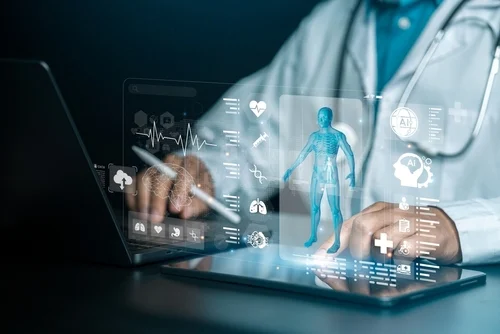
The Modern Therapy Clinic: 10 Technologies Reshaping Rehabilitation in 2026
From AI drafting to smartphone motion capture, ten technologies are changing how therapy clinics deliver care in 2026. What each one does, how mature it is and where it fits.

Technology in therapy clinics used to mean the EMR and maybe an ultrasound machine. In 2026, the list is longer and moving faster. Some of these tools are mature and well studied. Others are early but promising. Here are ten that are reshaping rehabilitation, with an honest read on each.
The backdrop is growing demand. The Bureau of Labor Statistics projects 12% employment growth for physical therapists between 2025 and 2035, far above the 3% average for all occupations (BLS). Technology is how clinics will serve more patients without burning out their teams.

1. AI-assisted documentation
- What it does: turns a visit into a draft note the clinician reviews and signs.
- Maturity: established in physician practice, growing in therapy. A randomized trial at UCLA Health found modest time savings and burnout improvements, with a reminder that clinician review is essential (UCLA Health).
2. Digital home programs
- What it does: delivers exercises with video, dosing and reminders on the patient's phone.
- Maturity: well established. A systematic review found that 7 of 10 randomized trials reported better adherence with digital interventions (PMC).
3. Telehealth
- What it does: live video visits for assessment, progression and check-ins.
- Maturity: mature. Medicare telehealth for therapists is extended through December 31, 2027 (CMS).
4. Remote therapeutic monitoring
- What it does: tracks adherence and therapy response between visits.
- Maturity: growing. New 2026 Medicare codes cover shorter monitoring periods of 2 to 15 days (CMS).
5. Secure messaging
- What it does: two-way communication between patients and therapists, with files and photos.
- Maturity: mature, and one of the simplest ways to keep patients engaged.
6. Engagement analytics
- What it does: shows adherence, attendance and drop-off trends across patients and therapists.
- Maturity: established. The value comes from acting on the data, not just viewing it.
7. Predictive models
- What it does: estimates which patients are at risk of poor outcomes or dropping out.
- Maturity: early. Research shows promise, but a 2024 scoping review found the field still lacks robust validation for routine practice (Musculoskeletal Science and Practice).
8. Wearable sensors
- What it does: measures movement, activity and exercise performance outside the clinic.
- Maturity: growing. A 2026 scoping review of 55 studies found wide use of inertial sensors, cameras and other sensors for movement quality assessment and biofeedback (PMC).
9. Smartphone motion capture
- What it does: uses the phone camera and computer vision to analyze movement without markers.
- Maturity: early. Research is exploring smartphone-based markerless motion capture to give patients feedback at home (Sensors).
10. Branded patient apps
- What it does: puts the clinic's own name and brand on the patient's phone.
- Maturity: established. A branded app strengthens the relationship between patient and clinic, rather than with a third-party platform.
How to prioritize
Not every clinic needs every technology at once. A practical order:
- Start with the foundations: digital home programs, secure messaging and reminders.
- Add visibility: engagement analytics and outcome forms.
- Extend care: telehealth and, where it fits, remote monitoring.
- Reduce documentation: AI drafting with clinician review.
- Watch the frontier: sensors, motion capture and predictive models as evidence matures.
Where TheraPro fits
TheraPro Clinical covers the foundations in one platform: home programs from a professional video library, secure messaging, reminders, analytics on adherence and drop-off, intake and outcome forms, telehealth with Smart Notes™ drafts and a branded patient app for iOS, Android and web. Each clinic runs in its own isolated, encrypted environment with a signed business associate agreement.
The takeaway
The modern therapy clinic is not defined by any single technology. It is defined by how well its tools work together to keep patients engaged, reduce friction for staff and make good care easier to deliver.